Updated November 10, 2026
Frozen or Burst Pipe in Montclair, NJ: What to Do, Who to Call, and What the Repair Involves
A pipe that freezes overnight is a nuisance. A pipe that splits and then thaws while you are at work is a ceiling, a floor and an insurance claim. This guide is for the moment it happens in a Montclair house: what to shut off, whether the call goes to the Water Bureau or a plumber, how to thaw a line without starting a fire, and the New Jersey rules that apply to the repair.
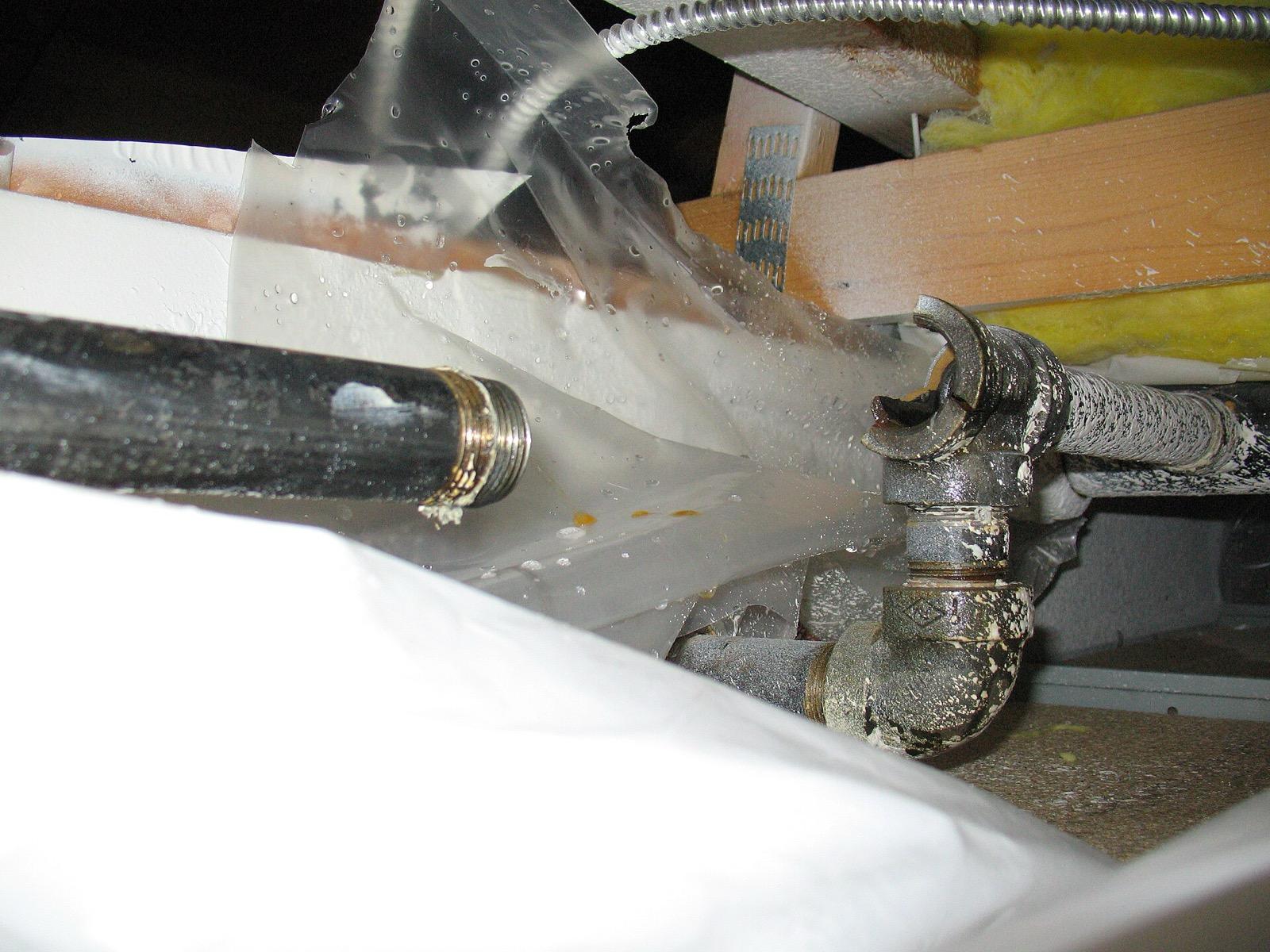
Short answer
If water is flowing, close your main shutoff, turn off power to any wet area you can reach safely, and call a licensed master plumber. A frozen or cracked meter, or water at the street, goes to the Montclair Water Bureau at 973-744-4600. A frozen pipe that hasn't split can usually be thawed with gentle heat and the faucet open. Never use an open flame. A like-for-like pipe repair needs no permit in New Jersey; rerouting the pipe does.
If a pipe has burst: the first fifteen minutes
Find the main shutoff before you need it. In most Montclair houses it sits in the basement on the wall facing the street, close to where the service line comes through the foundation and next to the meter. Turn it clockwise until it stops. Old gate valves on pre-war plumbing sometimes seize or only close partway; if yours won't budge, don't force it until it snaps. Tell the plumber when you call, and ask the Water Bureau whether it can shut the curb valve.
Once the main is closed, open the lowest faucet in the house (a basement laundry tub or a first-floor sink) to drain what is left in the lines and take pressure off the break. If water is near outlets, a panel or appliances, stay out of it. Shut off the circuit at the panel only if you can reach the panel standing on a dry floor; otherwise wait for help.
Then document. Take photos and short videos of the split pipe, the water on the floor and the ceiling, and anything damaged, before you start moving things. Insurers ask for this, and it is hard to recreate later. Move rugs, boxes and electronics out of the wet area, and put a bucket and towels under the break.
Who to call for which problem
| What you are seeing | Who to call | Why |
|---|---|---|
| Water is spraying or pouring from a pipe inside the house | Shut your main valve first, then a licensed plumber | Every minute of flow adds to the cleanup. Closing the main stops it; the plumber cuts out and replaces the split section. |
| No water (or a trickle) at one fixture on a very cold morning | Try a safe thaw yourself; plumber if you can't find or reach the frozen spot | The Red Cross says to suspect a frozen pipe when only a trickle comes out, and to call a licensed plumber if the frozen area is inaccessible or won't thaw. |
| The water meter is cracked or frozen | Montclair Water Bureau, 973-744-4600 | The township's 311 guidance says the property owner is liable for a meter that froze and that the replacement is purchased from the Water Bureau. |
| Water is coming up in the street, sidewalk or curb area | Montclair Water Bureau, 973-744-4600 | A break in a main or on the street side of the service is a utility matter first. Ask the Bureau whether the leak is on its side or yours before you hire anyone to dig. |
| Water has reached outlets, a panel, or a ceiling is sagging | 911 if anyone is at risk; then the electric utility or an electrician, plus a plumber | Stay out of standing water near live electrical equipment. A bulging, water-loaded ceiling can come down. |
| Carpets, drywall or plaster are soaked | A water-mitigation (drying) company, in addition to the plumber | The plumber fixes the pipe; drying, moisture readings and removal of wet materials are a separate trade and usually a separate line on an insurance claim. |
The township lists the Water Bureau and Sewer Utility at 54 Watchung Avenue, phone 973-744-4600, with office hours Monday to Friday, 8:30 a.m. to 4:30 p.m. The meter rule is worth knowing before a cold snap: Montclair's 311 answer on frozen meters says a meter should not be kept somewhere that freezes, that the owner is liable when it does, and that you buy the replacement from the Bureau.
If the pipe is frozen but not split
A faucet that gives a trickle, or nothing, on a frigid morning while the rest of the house has water is the classic sign. The American Red Cross says the likely spots are pipes against exterior walls and the place where the water service enters through the foundation. Its thawing steps are simple:
- Keep the faucet open so melting ice has somewhere to go and running water speeds the thaw.
- Warm the frozen section with an electric heating pad, a hair dryer, a portable space heater kept clear of anything flammable, or towels soaked in hot water.
- Keep applying heat until full pressure comes back, then check every other faucet in the house.
- Do not use a blowtorch, a kerosene or propane heater, a charcoal stove or any open-flame device.
Watch the pipe as it thaws. Ice can hide a split, and the leak only shows once water moves again. If you can't find the frozen section, it's inside a finished wall, or it won't thaw, that's the point the Red Cross says to call a licensed plumber.
Need a plumber for a frozen or burst pipe?
Tell us what happened, where the pipe is, and your neighborhood. We pass quote requests to local plumbers. If water is flowing right now, close your main valve first.
Where pipes freeze in Montclair houses
The Red Cross lists the usual suspects: outdoor hose bibs, pool and sprinkler supply lines, supply pipes in unheated basements, crawl spaces, attics and garages, lines under kitchen and bathroom cabinets, and pipes on exterior walls with little or no insulation. Montclair's housing stock adds a few local twists. Many houses were built long before modern insulation codes, and later additions, enclosed porches, mudrooms and kitchen bump-outs were often built over shallow crawl spaces with plumbing running through them. A second-floor bathroom over an unheated garage, or a kitchen sink on an outside wall facing a north wind, can freeze while the rest of the house is warm.
If a pipe has frozen once, it will usually freeze in the same place again. That is why the most useful thing a plumber can tell you after the repair is why that spot got cold: an air leak at the sill, a missing section of insulation, a crawl-space vent left open, or a run that simply should not be on that wall.
What the repair involves, and what moves the bill
We don't publish price ranges for this. Every quote depends on the house, and a number pulled from a national survey tells you little about a split pipe inside a plaster wall in Upper Montclair at 11 p.m. These are the factors to ask about on the phone and on the invoice:
| Factor | What to ask |
|---|---|
| Access to the break | A split in an open basement ceiling is a short job. The same split inside a plaster wall on an exterior wall of a 1910s house means opening the wall, and the plaster repair is a separate trade afterward. |
| Pipe material at the break | Copper, galvanized steel, CPVC and PEX are all still found in Montclair houses, sometimes in the same basement. Transitions between old galvanized and newer pipe can turn a one-fitting fix into a longer section. |
| How many places froze | The Red Cross notes that if one pipe freezes, others may too. A plumber who checks every fixture on the same exterior wall before leaving can save you a second emergency call. |
| Timing | Nights, weekends and cold snaps are when everyone is calling. Ask whether an after-hours rate applies before the plumber is dispatched, and get it in writing or by text. |
| Reroute vs repair in place | Replacing the damaged section where it sits is ordinary maintenance under the NJ construction code. Moving the pipe away from a cold exterior wall is an alteration and needs a plumbing permit (see below), which adds time and fees but may be the fix that keeps it from happening again. |
| What is not in the plumbing bill | Water extraction and drying, mold checks, drywall or plaster, paint, flooring and contents. Ask the plumber to note where the water went so you can scope those separately. |
Once the pipe is fixed, the house still has to dry. Our water damage restoration guide covers extraction and drying, and if the plumber had to open an old wall, the plaster wall repair guide explains how that patch is usually handled in older Montclair homes.
NJ permit and licensing rules for the repair
Permit. New Jersey's Uniform Construction Code treats certain work as ordinary maintenance that needs no permit, inspection or notice to the construction office. Under N.J.A.C. 5:23-2.7(c)2, ordinary plumbing maintenance includes the "repair of leaks involving the replacement of piping," replacing valves and replacing hose bib valves (the replacement hose bib needs an approved atmospheric vacuum breaker). So cutting out a split section and replacing it in place generally does not need a permit. The same rule says the addition, alteration, replacement or relocation of water supply piping is not ordinary maintenance. If the fix is to reroute a line off an exterior wall, expect a plumbing permit from the Montclair Building Office.
License. No permit doesn't mean anyone can do it. N.J.A.C. 13:32-1.4 says plumbing may only be performed by a licensed master plumber, an authorized plumbing contractor, or W-2 employees working under a master plumber's supervision, and it spells out that this includes minor work and ordinary repairs even when no permit is required. The one exception that matters here is a single-family homeowner doing plumbing work on their own dwelling. If you are paying someone, ask for the master plumber's license number and look it up with the NJ Division of Consumer Affairs before work starts.
Not sure who to call? Our guide to plumbers serving Montclair compares local firms on what they publish about licensing and services.
Insurance: what to do before you call
The National Association of Insurance Commissioners says homeowners policies cover damage from a "sudden and accidental" discharge from a plumbing system, and that policies generally require you to keep the home at a minimum temperature, or shut off the water supply if the house is vacant. If the insurer decides the plumbing was neglected, the damage may not be covered. The DC insurance department's consumer guidance puts the floor at 55°F and tells owners of vacant, unheated property to shut off the water and drain the system.
That matters most in Montclair for houses that sit empty for a while: an estate waiting to be sold, a snowbird home, a rental between tenants, or a house under renovation with the heat off. Read your own policy's freezing and vacancy language now, not after the claim. When a pipe does burst, stop the water, take photos, keep the damaged pipe section if the plumber removes it, save every invoice, and report the claim promptly.
Keeping it from happening again
- Before the first hard freeze, disconnect and drain garden hoses, close the inside valve that feeds each outdoor hose bib, and leave the outside bib open so trapped water can expand.
- Drain sprinkler and pool supply lines the way the installer specifies, without adding antifreeze unless told to.
- Insulate exposed pipes in basements, crawl spaces, garages and attics with pipe sleeves or UL-listed heat cable.
- On the coldest nights, open sink cabinets on exterior walls and let a cold faucet drip.
- Keep the thermostat at the same setting day and night during a cold snap, and no lower than 55°F if you travel.
- Keep the garage door closed if water lines run through the garage.
Those steps come from the Red Cross and IBHS guidance cited below. For the rest of the cold-weather checklist (boiler service, gutters, chimney and ice dams), see our guide to winterizing a Montclair home.
FAQ
Who do I call for a burst pipe in Montclair, NJ?
If the break is inside your house, shut off your main water valve and call a licensed master plumber. If the meter is frozen or cracked, or water is coming up at the street or curb, call the Montclair Water Bureau at 973-744-4600. If water has reached electrical equipment or a ceiling is sagging and anyone is at risk, call 911 first.
How do I thaw a frozen pipe safely?
The American Red Cross advice is to keep the faucet open, then warm the frozen section with an electric heating pad, a hair dryer, a portable space heater kept away from anything flammable, or towels soaked in hot water, and keep applying heat until full pressure returns. Never use a blowtorch, kerosene or propane heater, charcoal stove or any open flame. If you can't find or reach the frozen section, or it won't thaw, call a licensed plumber.
Do I need a permit to fix a burst pipe in New Jersey?
Usually not for a straight repair. N.J.A.C. 5:23-2.7 lists the repair of leaks involving the replacement of piping as ordinary plumbing maintenance, with no permit, inspection or notice required. Relocating or altering water supply piping is not ordinary maintenance, so a reroute away from a cold wall generally needs a plumbing permit from the Montclair Building Office.
Does a plumber need a license to fix a burst pipe in NJ?
Yes, if you are paying someone to do it. Under N.J.A.C. 13:32-1.4, plumbing, including minor work and ordinary repairs that don't need a permit, may only be performed by a licensed master plumber, an authorized plumbing contractor, or W-2 employees working under a master plumber's supervision. A single-family homeowner working on their own dwelling is exempt. A handyman is not a substitute for a licensed plumber on this job.
Will homeowners insurance cover a burst frozen pipe?
Often, if the damage was a sudden and accidental discharge and you took reasonable steps to prevent freezing. The NAIC says policies generally require you to maintain a minimum temperature in the home or shut off and drain the water if it is vacant, and that neglect can lead to a denial. Read your own policy's freezing and vacancy language, photograph the damage, and stop the water before you call the insurer.
What temperature should I leave the heat at when I'm away?
The Red Cross says no lower than 55°F if you will be away during cold weather. Insurance regulators such as the DC Department of Insurance, Securities and Banking give the same 55°F floor. If a house will be empty with no heat, shut off the water supply and drain the system.
Request a Montclair plumber
Burst pipe, frozen line, or a reroute so it doesn't happen next winter. Tell us the job and we'll route it to local plumbers. Routing a request is not an endorsement of any company.
Sources accessed November 10, 2026: American Red Cross — Frozen Pipes; Township of Montclair — Water Bureau & Sewer Utility; Montclair 311 — Frozen/cracked meter; N.J.A.C. 5:23-2.7 (ordinary maintenance); N.J.A.C. 13:32-1.4 (scope of plumbing practice); NAIC — burst pipe water damage; DC DISB — frozen pipes and insurance. This guide is general information, not legal or insurance advice; your policy wording controls. Photo: Bfblake321 / Wikimedia Commons, CC BY-SA 3.0.